Varicose Veins

Varicose vein disease is a chronic condition affecting the veins of the lower extremities. It is accompanied by various impairments in blood outflow associated with pathological changes in the venous valves, which may ultimately lead to pathological changes throughout the vascular system. Its complications often result in long-term incapacity for work and may sometimes cause disability.
This condition, considered one of the most common disorders, affects 30 to 40% of the adult population.
The most important etiological factors in the development of varicose vein disease include:
- hereditary predisposition (if both parents have this condition, the risk of inheriting the disease increases to 60%)
- connective tissue disorders
- sex — women are affected 1.5-2 times more often (pregnancy and hormonal disorders contribute to this)
- use of hormonal medications (progesterone, estrogen)
- excess body weight (a 20% increase in weight leads to a fivefold increase in the risk of developing chronic venous insufficiency)
- prolonged static strain and low physical activity
The first symptoms of the condition include:
- aching pain,
- heaviness in the legs,
- rapid fatigue,
- swelling,
- itching of the skin,
- discomfort in the legs,
- calf muscle cramps.
These symptoms are most noticeable at the end of the working day. Many patients have pronounced signs of varicose vein disease with minimal symptoms, while others have only minor visible signs but pronounced symptoms.
Visible signs:
- telangiectasias
- reticular veins
- varicose veins
- thrombophlebitis
- hyperpigmentation
- bleeding from varicose veins following injury
- ulcer formation.
Conservative treatment of chronic venous disease is generally used to manage symptoms. However, the only definitive treatment for varicose vein syndrome is surgery, which aims to eliminate blood flow through pathologically altered veins.
Phlebectomy is a surgical procedure to remove varicose veins. Modern phlebectomy is a combined intervention that includes the following stages:
- elimination of the source of reflux at the saphenofemoral or saphenopopliteal junction
- removal of the main superficial vein
- removal of varicose tributaries
- elimination of reflux in incompetent perforating veins
Modern medicine uses endovenous laser coagulation (EVLC, EVLT) to treat varicose veins. It is a definitive yet minimally invasive treatment method. The latest laser systems are currently used. The patient’s affected areas are treated with a laser at an optimal wavelength (1470/1940 nm).
The laser fiber ensures reliable closure of the vein. It does not cause adverse effects or heat the surrounding tissues. The procedure works by applying laser-generated heat to the endothelium, the inner wall of the vein. This causes the vessel to close.
This minimally invasive procedure is performed under ultrasound guidance and local anesthesia. An intravenous catheter is used to puncture the vein at the appropriate level of the thigh or lower leg. An optical fiber is passed through the catheter into the vein and advanced along the entire pathologically altered segment. As the fiber is gradually withdrawn, laser pulses are delivered through it, causing the vein to coagulate and seal from the inside.

After the procedure, compression stockings must be worn to apply pressure to the veins and achieve a better outcome. The patient can leave the clinic just a few hours after the procedure if they are in good physical condition. After the laser procedure, the patient is advised to walk every day. Walking activates the muscle pump, which helps blood drain from the legs.
The procedure does not involve incisions and leaves no pigmentation or scars. This type of treatment for varicose veins has become widespread in Western countries.
Other advantages of EVLT include:
- Rapid recovery
- Minimal tissue trauma
- Excellent cosmetic outcome
- No marks on the skin
- Treatment under local anesthesia (tumescent anesthesia)
- No pain syndrome
- High therapeutic effectiveness
Laser treatment of varicose veins allows patients to maintain their ability to work and remain physically active.
According to many years of clinical experience and scientific research, this method has a very low risk of recurrence – 3-5%.
Contraindications to laser vein ablation include:
- pregnancy
- deep vein thrombosis
- chronic lower-limb ischemia
- decompensated comorbidities (diabetes mellitus, heart failure, kidney failure, or liver failure).
Minor bruising and swelling may occur immediately after the procedure. Any mild pain or elevated body temperature can be managed with nonsteroidal anti-inflammatory drugs. There will be no scars because the procedure is performed without any incisions. The patient can return to normal activities immediately after the procedure. The positive results of the procedure will become noticeable within a few months.
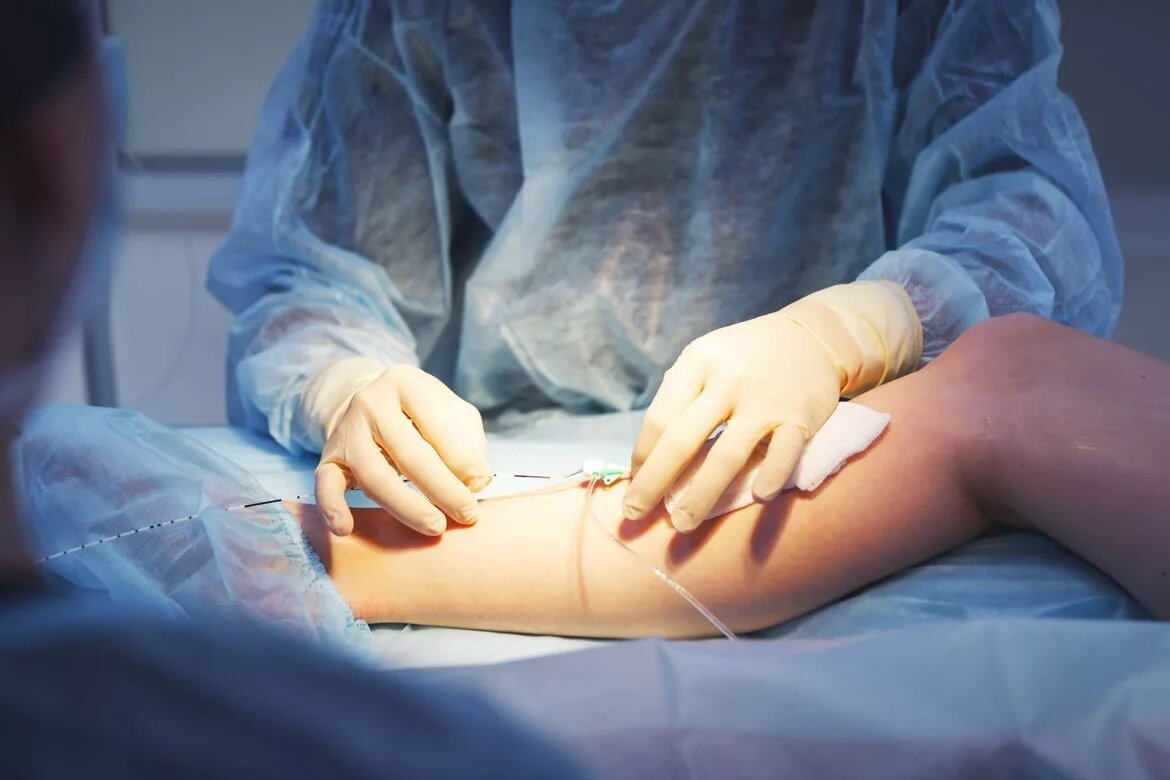

Sclerotherapy is used as an adjunct to laser ablation.
Sclerotherapy (compression phlebosclerotherapy) – is a method of removing varicose veins that involves injecting special sclerosant medications into their lumen, followed by compression with elastic compression garments. The sclerosant causes destruction of the inner wall of the varicose vein, while compression creates the conditions for complete closure (adhesion or obliteration) of the vein lumen. Within 2-6 months after sclerotherapy, a thin strand of connective tissue forms and is almost completely resorbed within 1-1.5 years, as confirmed by histological studies. Continuous elastic compression is required for 7 days after each sclerotherapy session throughout the treatment period, followed by daytime elastic compression for 1-3 months after the final session.
The duration of treatment depends on the stage and form of the condition and is determined by a phlebologist. On average, 3-6 sessions are required for each leg, with 3 to 20 sclerosant injections administered per session. A positive cosmetic result becomes apparent 2-8 weeks after completion of sclerotherapy. In some cases, the intervals between sclerotherapy sessions are extended to 3-10 weeks to achieve a better cosmetic result. Treatment takes the longest in cases of multiple telangiectasias and/or reticular veins (superficial veins up to 3 mm in diameter that “feed” the telangiectasias) and extensive involvement.
It is important to remember that people with relevant risk factors and a hereditary predisposition to varicose veins should consult a vascular surgeon or phlebologist once a year and undergo a mandatory ultrasound examination of the veins.