



Pediatric ophthalmologist in Stryi
Diagnosis and treatment of vision problems in children
A child’s vision develops actively from the first years of life, so regular preventive examinations are important even when there are no complaints. At Lviv Medical Center, a pediatric ophthalmologist in Stryi performs comprehensive eye examinations, diagnoses eye diseases, and selects treatment based on the child’s age and individual needs.
A pediatric ophthalmologist, or pediatric eye doctor as parents often say, should be consulted not only when a child begins to see less clearly. Squinting, rapid eye fatigue, headaches, difficulty reading, or changes in behavior during visually demanding activities may be signs of a vision problem. Timely diagnosis helps identify the problem at an early stage and select appropriate treatment.
Have you noticed worsening vision, frequent squinting, or would you like a preventive eye examination?
Schedule an examination for your child with a pediatric ophthalmologist at Lviv Medical Center
When should you consult a paediatric ophthalmologist?
A consultation with a pediatric ophthalmologist is needed if your child:
A pediatric ophthalmologist should also be consulted before a child starts school, in cases of significant visual strain, after eye injuries, and for children who already wear glasses or contact lenses.
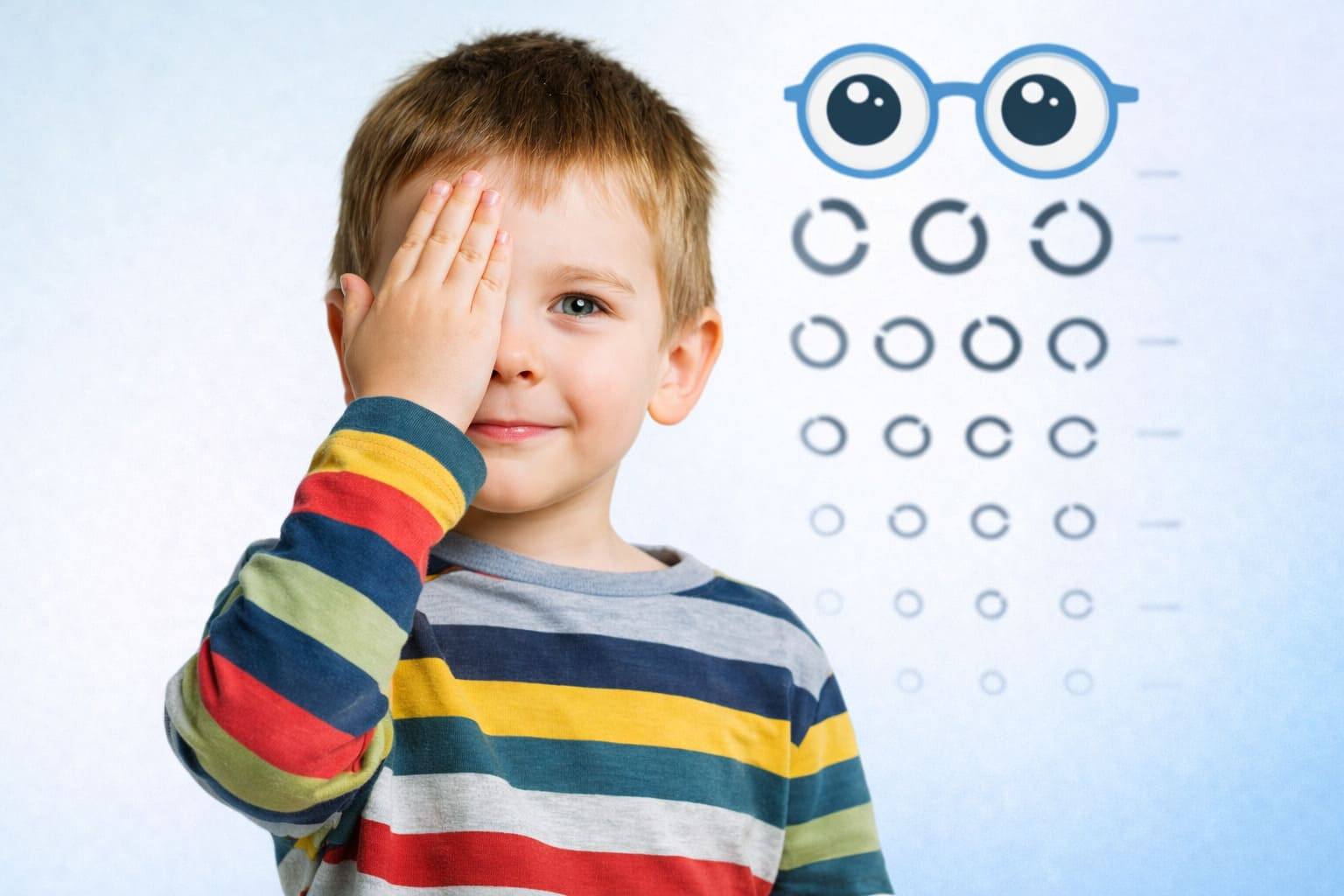
Preventive Eye Examinations for Children
Even if a child has no symptoms, their vision should be checked regularly. Children do not always notice gradual vision deterioration because they may perceive blurred images as normal.
A preventive examination by a pediatric ophthalmologist helps detect the following in a timely manner:
- nearsightedness;
- farsightedness;
- astigmatism;
- strabismus;
- amblyopia;
- accommodation disorders;
- inflammatory eye conditions;
- changes in the ocular fundus.
Early diagnosis is particularly important for amblyopia, or “lazy eye,” because treatment outcomes largely depend on the child’s age and how early the condition is detected.
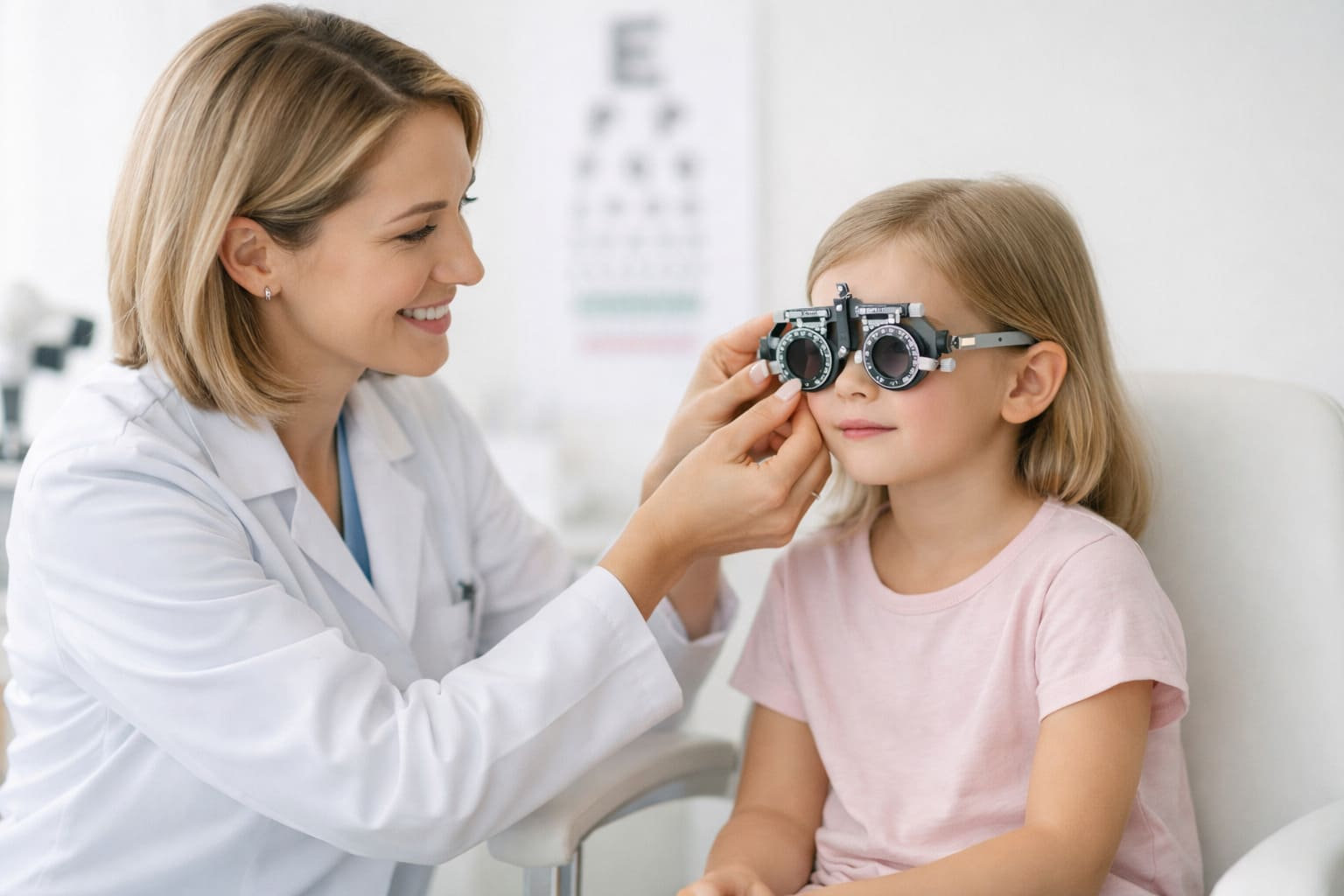
What to expect during a pediatric ophthalmologist appointment
The child’s examination takes place in a calm environment and is adapted to their age. The doctor explains each stage of the examination in clear language so that the child feels comfortable during the appointment.
During the consultation, the pediatric ophthalmologist may perform:
- a visual acuity test;
- a refraction assessment;
- an examination of the anterior segment of the eye;
- an assessment of eye alignment;
- an eye movement assessment;
- a fundus examination;
- intraocular pressure measurement, if indicated;
- an eyeglass prescription;
- an assessment of binocular vision.
Based on the examination results, the doctor assesses the condition of the child’s visual system and, if necessary, recommends additional diagnostic tests.
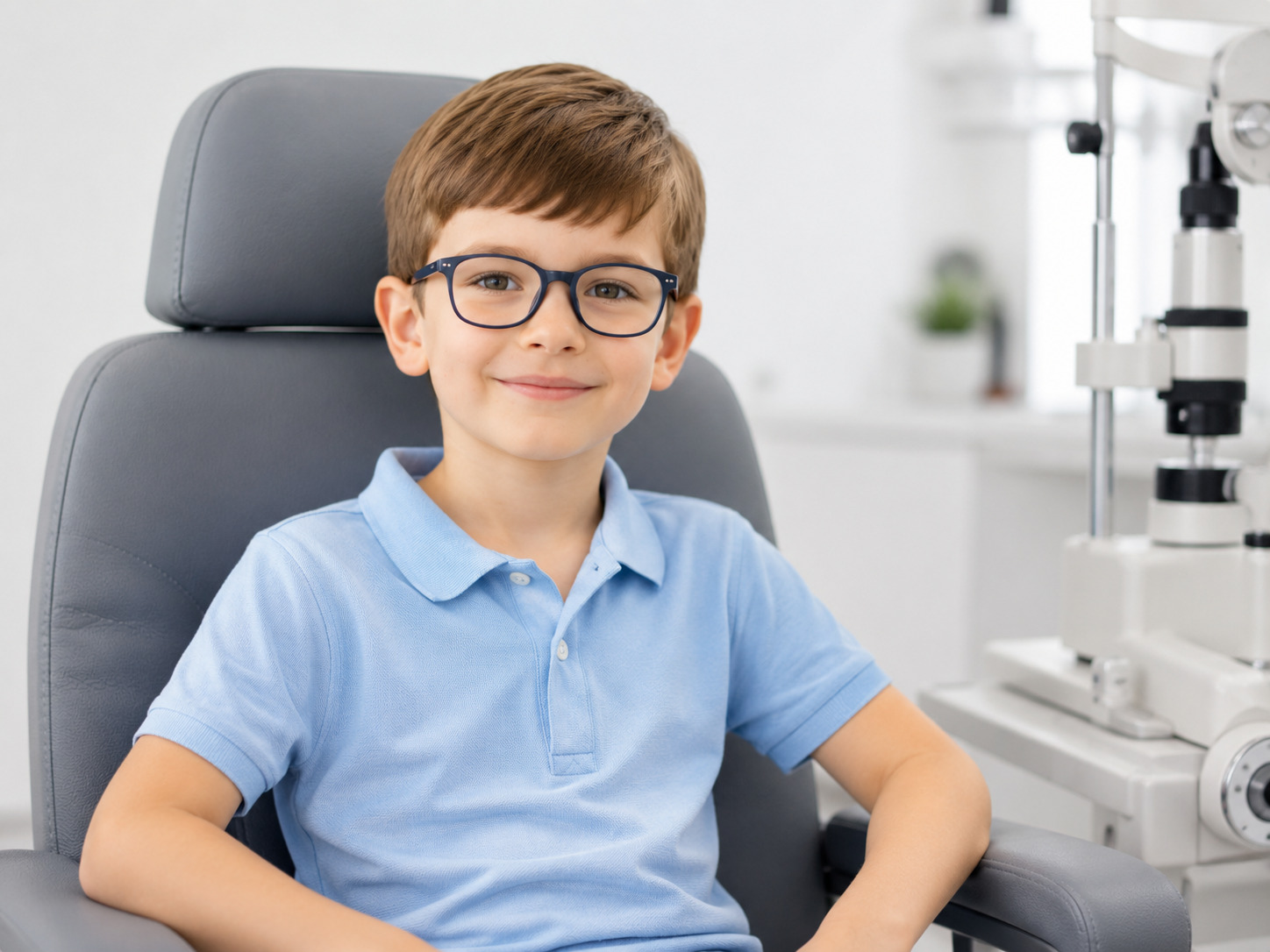
Additional Vision Diagnostic Methods
At Lviv Medical Center, pediatric ophthalmology includes not only a standard examination but also additional vision diagnostic methods. They help determine the cause of vision deterioration more accurately, assess how the visual system functions, and select the optimal treatment strategy.
Additional tests may include:
- autorefraction;
- retinoscopy;
- a dilated fundus examination;
- optical coherence tomography, if indicated;
- keratometry;
- an accommodation assessment;
- strabismus assessment;
- a binocular vision test.
For some children, it is important to perform the examination after administering special eye drops that temporarily relax accommodation. This makes it possible to determine the eye’s refraction more accurately and ensure the correct eyeglass prescription.

Visual acuity test
Using special charts or images, the doctor assesses how clearly the child can see at different distances. This examination determines visual acuity and identifies potential vision problems.

Computerized vision diagnostics
Autorefractometry measures the refractive error of the eye. The examination helps detect myopia, hyperopia, astigmatism, and other refractive disorders.

Examination of eye structures
Using biomicroscopy, the doctor assesses the cornea, lens, and other structures of the anterior segment of the eye, helping to detect potential abnormalities.

Assessment of eye function
Tests are performed to assess eye movement, eye muscle coordination, accommodation, and binocular vision.
Take Care of Your Child's Eye Health Today
Timely vision screening helps detect problems at an early stage and prevent their progression. Schedule your child for a consultation with a pediatric ophthalmologist at Lviv Medical Center.
Additional Modern Diagnostic Methods
If necessary, a pediatric ophthalmologist may prescribe additional diagnostic tests after the initial examination. These help provide a more detailed assessment of the eyes and visual system and allow changes that may not always be apparent during a standard examination to be detected promptly.

Optical biometry
This examination accurately measures the length of the eyeball and other anatomical parameters of the eye. The method is particularly important for monitoring the progression of myopia in children and tracking changes over time.

Corneal Topography
A method used to assess the shape and curvature of the cornea. It helps detect astigmatism and early corneal changes and is also used when fitting contact and orthokeratology lenses.

Optical coherence tomography and fundus photography
Modern imaging methods that allow detailed assessment of the retina and optic nerve. They are used to detect pathological changes and monitor the condition of the eyes over time.

Perimetry
A visual field test that helps assess its boundaries and detect functional impairments that may not be apparent during a routine vision test.
Main Areas of Pediatric Vision Treatment
Device-based vision therapy
Treatment of nearsightedness (myopia control)
Treatment of farsightedness
Astigmatism treatment
Strabismus treatment
Amblyopia treatment
Our pediatric ophthalmologists
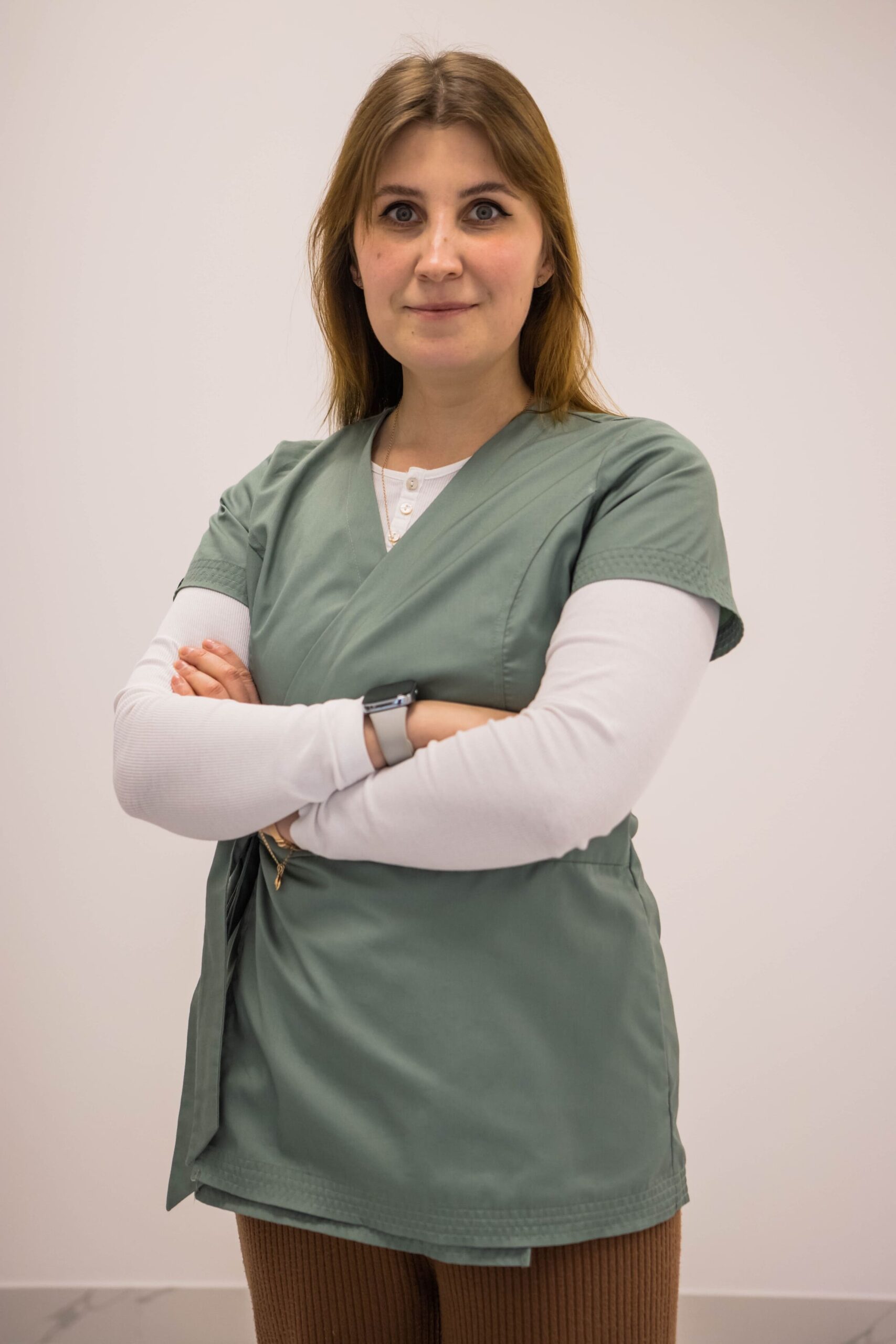
Yuliia Volodymyrivna Denkovych
Ophthalmologist
Practicing since 2019
Pediatric Ophthalmology, Ophthalmology
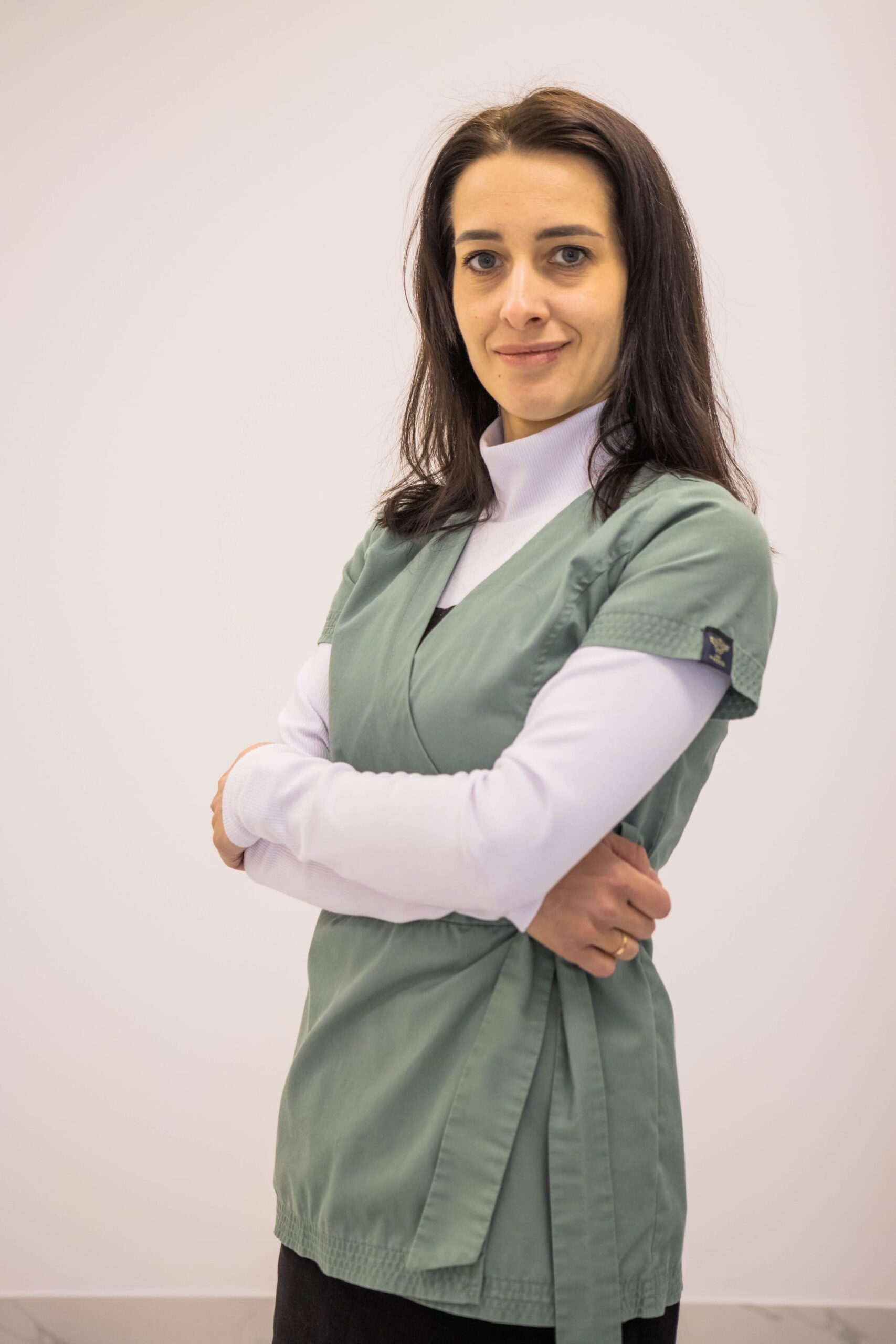
Yaryna Stepanivna Machalaba
Ophthalmologist
Practicing since 2011
Pediatric Ophthalmology, Ophthalmology
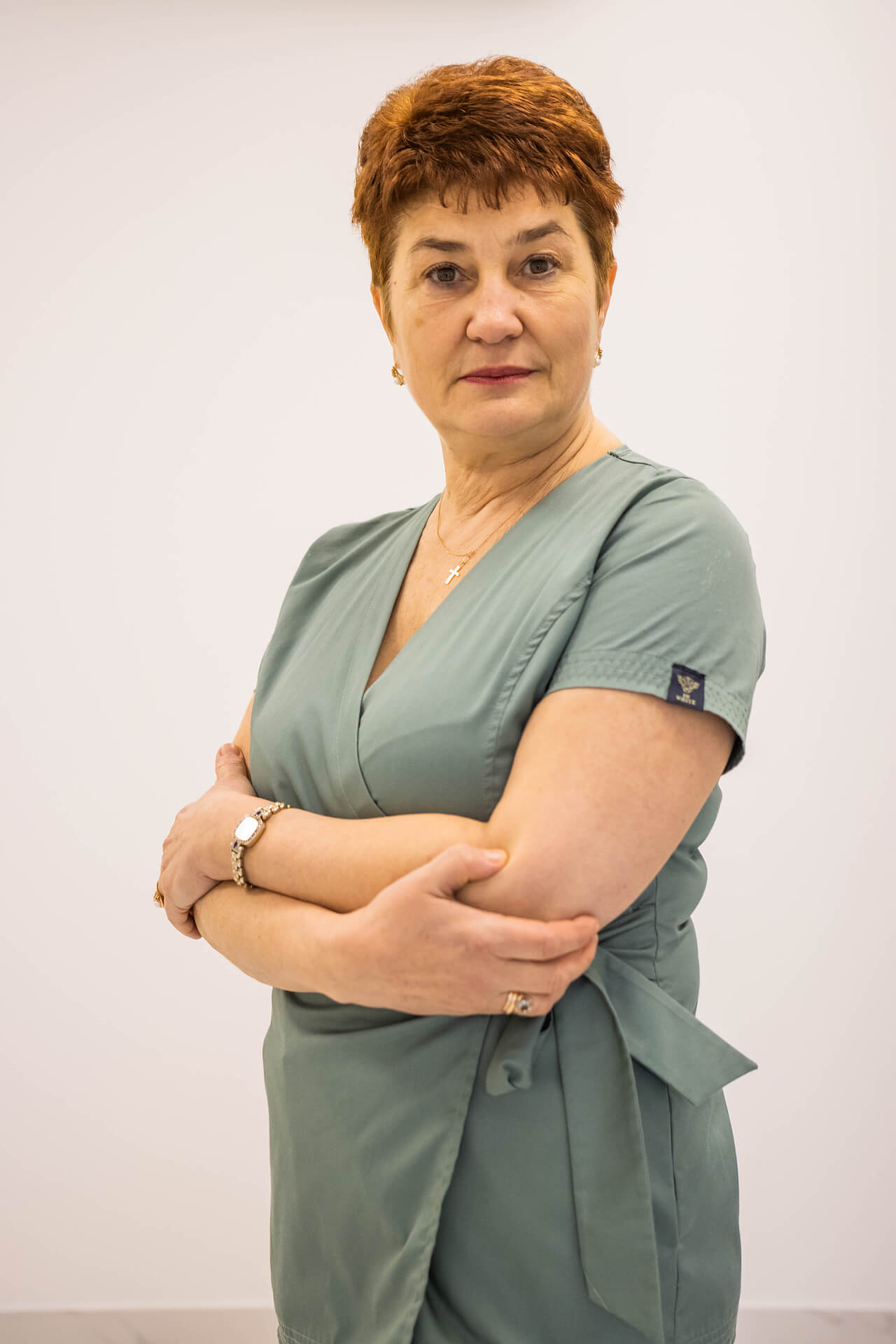
Kruta Olha Viktorivna
Ophthalmologist
Practicing Since 1986
Pediatric Ophthalmology, Ophthalmology
Vision therapy using specialized devices for children
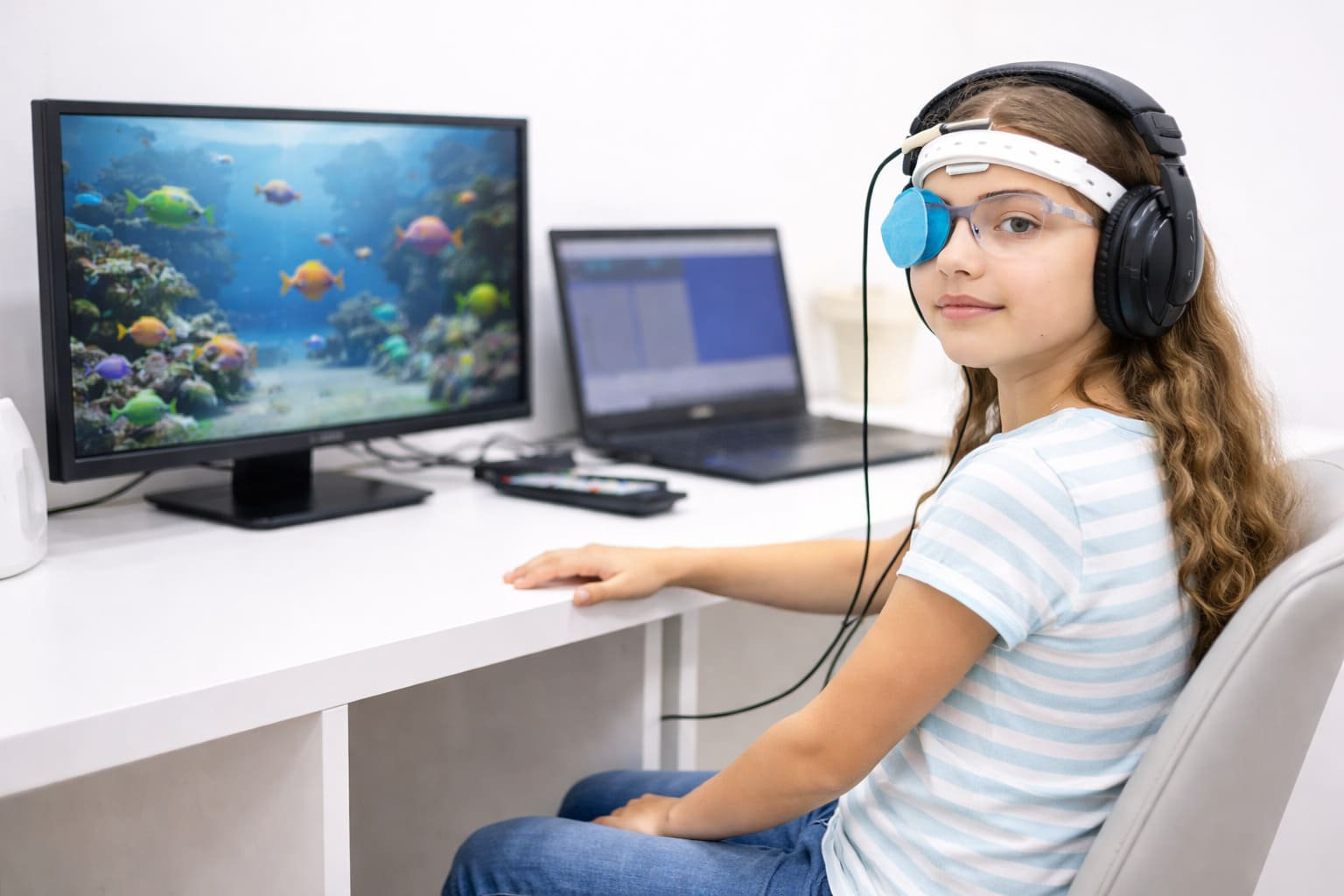
What is device-based treatment?
Device-based vision therapy is used as part of comprehensive treatment for amblyopia, strabismus, accommodation disorders, and other functional vision disorders.
Device-based vision therapy is prescribed by a pediatric ophthalmologist after an examination and diagnostic assessment. The program is selected individually, taking into account the child’s age, the condition of the visual system, visual acuity, and ability to perform the exercises.
Device-based vision therapy may help:
- stimulate the weaker eye;
- improve visual fixation;
- train accommodation;
- support the development of binocular vision;
- reduce eye fatigue.
This method is used only when clinically indicated and as part of an individually tailored treatment plan.
Who is device-based treatment recommended for?

Amblyopia
Device-based therapy helps stimulate the “lazy eye,” improve its participation in the visual process, and increase visual acuity.

Myopia
It may be used as part of comprehensive myopia management, particularly to train accommodation and reduce visual strain.

Strabismus
Helps train the eyes to work together, supports the development of binocular vision, and improves visual coordination.

Asthenopia
It is used for rapid eye fatigue and discomfort during reading, studying, or prolonged use of computers and other devices.
Vision therapy methods at Lviv Medical Center
Training at Panorama
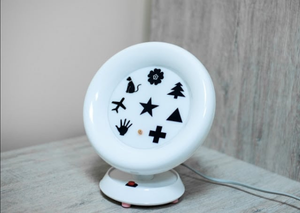
KEM macular stimulator
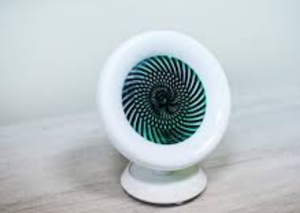
ASO color-pulse stimulation
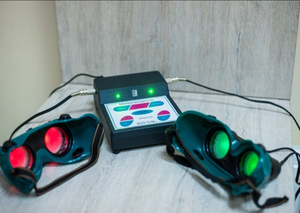
BRIZ accommodation therapy
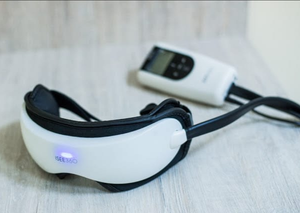
Accommodation training according to Dashevsky
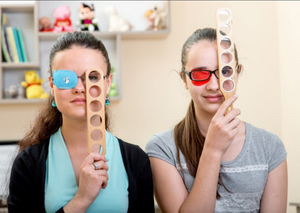
Accommodation Training According to Kovalenko
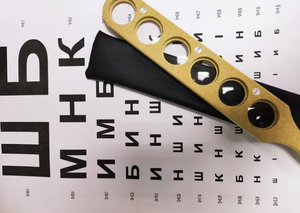
Amblyocor training
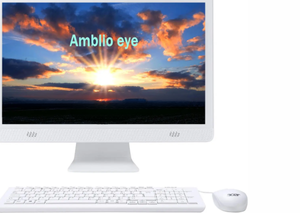
“Rainbow” accommodation training
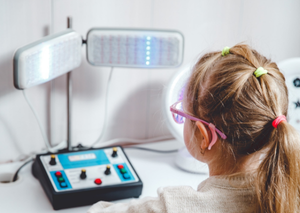
Synoptophore training

Do you suspect your child has vision problems?
A comprehensive examination will help determine the cause of the visual impairment and select an effective treatment program.
Treatment of myopia in children (myopia control)

Myopia in children
Nearsightedness, or myopia, – is a vision disorder in which a child can see nearby objects clearly but has more difficulty distinguishing objects at a distance. Signs may include squinting, sitting close to the television, difficulty reading writing on the board, or complaints of eye strain.
Myopia treatment and control may include:
- prescription glasses;
- soft contact lenses;
- overnight orthokeratology lenses;
- device-based therapy;
- managing visual workload;
- regular examinations by a pediatric ophthalmologist.
The main goal of treatment is to provide clear vision and control the progression of myopia in the child.
Methods for controlling myopia in children
Glasses
Contact lenses
Orthokeratology (night) lenses
Contact lenses for myopia control (Miopia)
Special spectacle lenses with defocus technology
Device-based treatment (vision therapy)
Overnight Contact Lenses for Children (Orthokeratology)
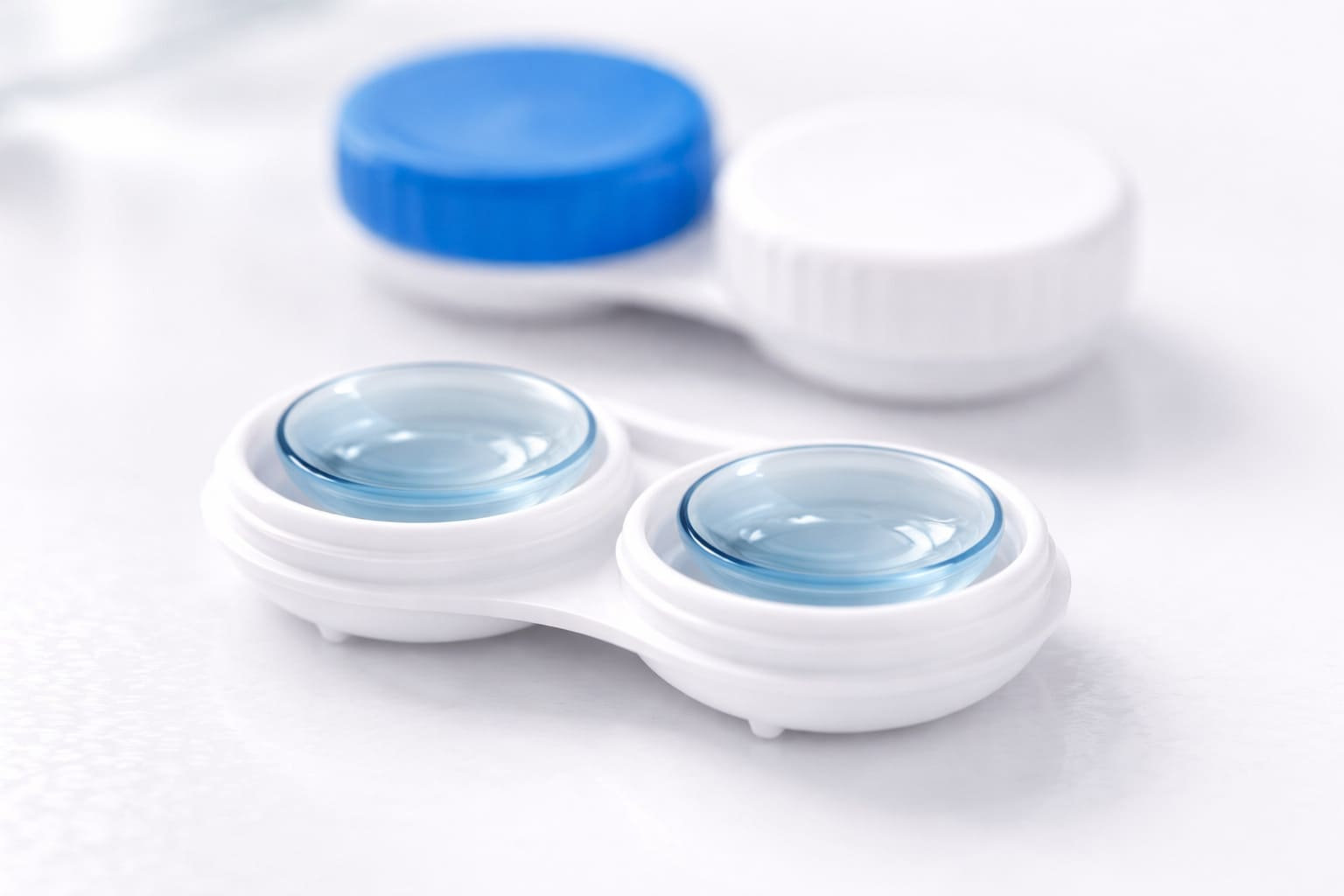
What Are Overnight Contact Lenses?

Who are overnight lenses suitable for?
Overnight lenses may be recommended for children with myopia, usually from the age of 6, provided the child can follow hygiene requirements and properly care for the lenses independently or with parental assistance.
Before fitting orthokeratology lenses, a pediatric ophthalmologist performs comprehensive vision diagnostics, assesses the condition and parameters of the cornea, and determines whether this method of myopia correction and control is suitable for the individual case.
Benefits of overnight contact lenses

Freedom from glasses
After wearing orthokeratology lenses overnight, the child may be able to see well during the day without glasses or regular contact lenses.

Active Lifestyle
Night lenses are convenient for children who participate in sports and active games and do not want to wear glasses during the day.

Myopia progression control
Orthokeratology lenses may be used to slow the progression of myopia in children and monitor changes in vision over time.

Non-surgical correction
The method does not require surgery. The effects of orthokeratology are reversible, and vision is monitored during regular check-ups with a pediatric ophthalmologist.
Have you noticed that your child has difficulty seeing at a distance?
Do not postpone a vision check. A timely consultation with a pediatric ophthalmologist will help detect myopia at an early stage and select an effective method to control its progression.
Treatment of hyperopia in children

What Is Farsightedness?
Farsightedness, or hyperopia, can be a normal physiological feature in children of a certain age. If the condition is pronounced or accompanied by symptoms, the child should be examined by a pediatric ophthalmologist.
Signs of farsightedness may include:
- rapid eye fatigue;
- headaches;
- reluctance to read;
- difficulty concentrating;
- occasional inward turning of the eyes toward the nose;
- blurred near vision.
Treatment for farsightedness in children is selected individually and may include correction with glasses, recommendations regarding visual strain, and regular monitoring by a pediatric ophthalmologist.
Which symptoms should you look out for?

Eye fatigue
A child may tire quickly while reading, writing, drawing, or performing other prolonged visual tasks.

Frequent eye rubbing
A constant urge to rub the eyes may be a sign of visual discomfort, eye strain, or fatigue.
Headache after visual strain
Headaches may occur after studying, reading, working at a computer, or prolonged use of digital devices.
Strabismus
In some children with farsightedness, one eye may deviate from the point of fixation. In this case, a consultation with a pediatric ophthalmologist is required.
Methods of treating farsightedness
Vision correction with glasses or contact lenses
Device-based treatment
Treatment of complications
Eye Care and Visual Strain Management
Does your child complain of eye strain or headaches?
Do not postpone your consultation. A comprehensive examination will help identify the cause of visual discomfort and allow treatment to begin promptly.
Treatment of astigmatism in children
What Is Astigmatism?
Astigmatism is caused by an uneven curvature of the cornea or lens, which prevents light from focusing properly. As a result, images may appear blurred or distorted at both near and far distances.
A child with astigmatism may squint, tilt their head, tire quickly while reading, or complain of headaches or blurred vision.
Treatment for astigmatism in children is selected individually and most often involves correction with glasses or contact lenses. Regular examinations by a pediatric ophthalmologist are also important for monitoring visual acuity and the development of the visual system.
Can astigmatism be corrected?
Astigmatism is associated with the shape of the cornea or lens, so it cannot be completely eliminated with medication or exercises. However, properly selected vision correction can provide the child with clear vision and reduce visual strain.
Timely diagnosis and treatment of astigmatism in children are particularly important while the visual system is developing. If significant astigmatism is not corrected, amblyopia, or “lazy eye,” may develop, leading to a persistent reduction in visual acuity.
The paediatric ophthalmologist selects the correction method individually, taking into account the child's age, the degree of astigmatism and the examination results.
Which symptoms should you look out for?
Eye fatigue
The child may tire quickly while reading, writing, drawing, or performing other visually demanding tasks. Sometimes discomfort develops shortly after starting these activities.

Squinting or tilting the head
To see more clearly, a child may squint, tilt their head, or look at objects from a particular angle. These signs may accompany astigmatism and other vision disorders.

Headache
Headaches after studying, reading, or prolonged use of digital devices may be associated with visual strain and require an eye examination.

Confusing similar symbols
A child may have difficulty distinguishing similar letters, numbers, or symbols while reading and writing. If these difficulties recur, it is advisable to consult a pediatric ophthalmologist.
Astigmatism Correction Methods
Glasses with cylindrical lenses
Toric contact lenses
Regular medical check-ups
Have you noticed that your child squints or gets tired quickly while studying?
An eye examination can help detect astigmatism promptly and select an effective correction method to support the proper development of the visual system.
Treatment of Strabismus in Children
What is strabismus?
Strabismus is a misalignment of the eyes in which one or both eyes may deviate from the common point of fixation. This condition affects not only appearance but also the development of binocular vision and may contribute to amblyopia.
Diagnosis of strabismus includes an assessment of eye position and movement, refraction, visual acuity, and binocular vision.
Treatment of strabismus in children is tailored individually and may include glasses, occlusion therapy, vision therapy using specialized devices, specific exercises, or surgical correction when indicated. The earlier the condition is detected, the greater the potential for proper development of the visual system.
Stages of strabismus treatment
Optical correction
Pleoptics (treatment of “lazy eye”)
Orthoptics and diploptics
Surgical treatment
Have you noticed signs of strabismus in your child?
A timely examination will help determine the cause of strabismus and begin step-by-step treatment to restore proper vision.
Treatment of amblyopia in children

How is amblyopia treated?
Treating amblyopia in children requires a comprehensive and consistent approach. The primary goals of treatment are to address the cause of reduced vision, stimulate the “lazy eye,” and improve visual acuity.
Depending on the cause and severity of amblyopia, treatment may include glasses or contact lenses, patching, vision therapy using specialized devices, and other methods of stimulating the visual system.
The earlier amblyopia treatment begins, the greater the opportunity to improve visual function and ensure that both eyes work together properly.
Causes of amblyopia
Strabismus
In cases of strabismus, the brain may gradually suppress the image from one eye to avoid double vision. This can lead to reduced visual acuity and the development of amblyopia.

Anisometropia
A significant difference in refractive power between the eyes causes one eye to produce a less distinct image. Over time, the brain may begin to rely on that eye less, creating a risk of amblyopia.

Congenital disorders
Congenital cataracts, ptosis, corneal clouding, and other conditions can prevent light from reaching the retina normally and affect visual development.

Injuries or changes to the fundus
Eye injuries, retinal disorders, or other changes in the fundus may impair the normal development of visual function and contribute to amblyopia.
Frequently asked questions
At what age should a child have their vision checked?
The first eye examinations are performed at an early age, after which the frequency of check-ups is determined by a pediatric ophthalmologist. Vision should always be checked before starting kindergarten and school, as well as if any symptoms or changes in the child’s behavior occur.
How often should a child see an ophthalmologist?
If there are no vision problems, preventive eye examinations should be performed regularly. In cases of myopia, amblyopia, strabismus, astigmatism, or other disorders, the pediatric ophthalmologist determines an individual follow-up schedule.
How does a pediatric ophthalmologist differ from an adult ophthalmologist?
A pediatric ophthalmologist takes into account the development of the visual system, age-specific refractive norms, and the risk of amblyopia, strabismus, and progressive myopia. Examination methods are also adapted to the child's age and abilities.
Are a pediatric eye doctor and a pediatric ophthalmologist the same?
Yes. A pediatric eye doctor and pediatric ophthalmologist are terms for a specialist who diagnoses, prevents, and treats eye diseases and vision disorders in children. The official name of the specialty is ophthalmology.
How can you tell if your child has poor vision?
Possible vision deterioration may be indicated by squinting, moving closer to the television or a book, tilting the head while reading, rapid eye fatigue, headaches, difficulty reading, or complaints of blurred vision.
Can Strabismus in a Child Be Treated?
The treatment approach depends on the type and cause of strabismus, the child's age, and the condition of the visual system. Treatment may include glasses, patching, device-based vision therapy, special exercises, or surgical correction when indicated.
What is device-based vision therapy?
Device-based vision therapy is a set of specialized procedures and exercises designed to stimulate and develop visual functions. It may be prescribed for amblyopia, strabismus, accommodation disorders, and other functional vision problems.
Do overnight lenses help with myopia?
Overnight orthokeratology lenses can be used for vision correction and to control the progression of myopia in children. They are not suitable for everyone, so the decision to use them is made by a pediatric ophthalmologist after comprehensive diagnostics.
Do I need a referral to see a paediatric ophthalmologist?
No, you can book your child for a pediatric ophthalmologist consultation without a referral. If you have the results of previous examinations or eyeglass prescriptions, you are advised to bring them with you.
How much does an appointment with a pediatric ophthalmologist cost in Lviv?
The consultation fee depends on the scope of the examination and whether additional tests are required. The current fee for an appointment with a pediatric ophthalmologist in Stryi can be found in the “Prices” section or confirmed when booking.
Have you noticed that your child has poorer vision in one eye?
A comprehensive examination will help determine the cause of vision loss and begin treatment to restore vision.
- Eyelid surgery
- Vitreoretinal surgery
- Removal of a Subluxated Crystalline Lens
- Closed vitrectomy
- Optical Coherence Tomography (OCT)
- Vision diagnostics
- Examination before laser vision correction
- Pachymetry
- Tonometry
- Glaucoma Treatment
- Retinal coagulation
- Keratoconus Treatment
- Laser vision correction
- Cataract treatment
- Artificial Lens (IOL) Implantation
- Phakic lens implantation
- Pterygium Treatment
- Ophthalmology
- Pediatrics