



Pediatric ophthalmologist in Sambir
Diagnosis and treatment of vision problems in children
A child’s vision develops actively from an early age, so regular preventive examinations help detect potential problems promptly. A pediatric ophthalmologist at Lviv Medical Center performs a comprehensive vision examination, diagnoses eye conditions, and recommends an appropriate monitoring or treatment plan based on the child’s age.
A pediatric ophthalmologist, or children’s eye doctor, should be consulted not only when symptoms appear. Some vision problems develop gradually, and a child may not always notice or be able to explain that their vision has worsened.
Have you noticed worsening vision, frequent squinting, or would you like a preventive eye examination?
Schedule an examination for your child with a pediatric ophthalmologist at Lviv Medical Center
When should you consult a paediatric ophthalmologist?
A pediatric ophthalmology consultation is recommended if your child:
It is also important for children to have a preventive examination with a pediatric ophthalmologist before starting school, when experiencing significant visual strain, after eye injuries, and if they already wear glasses or contact lenses.
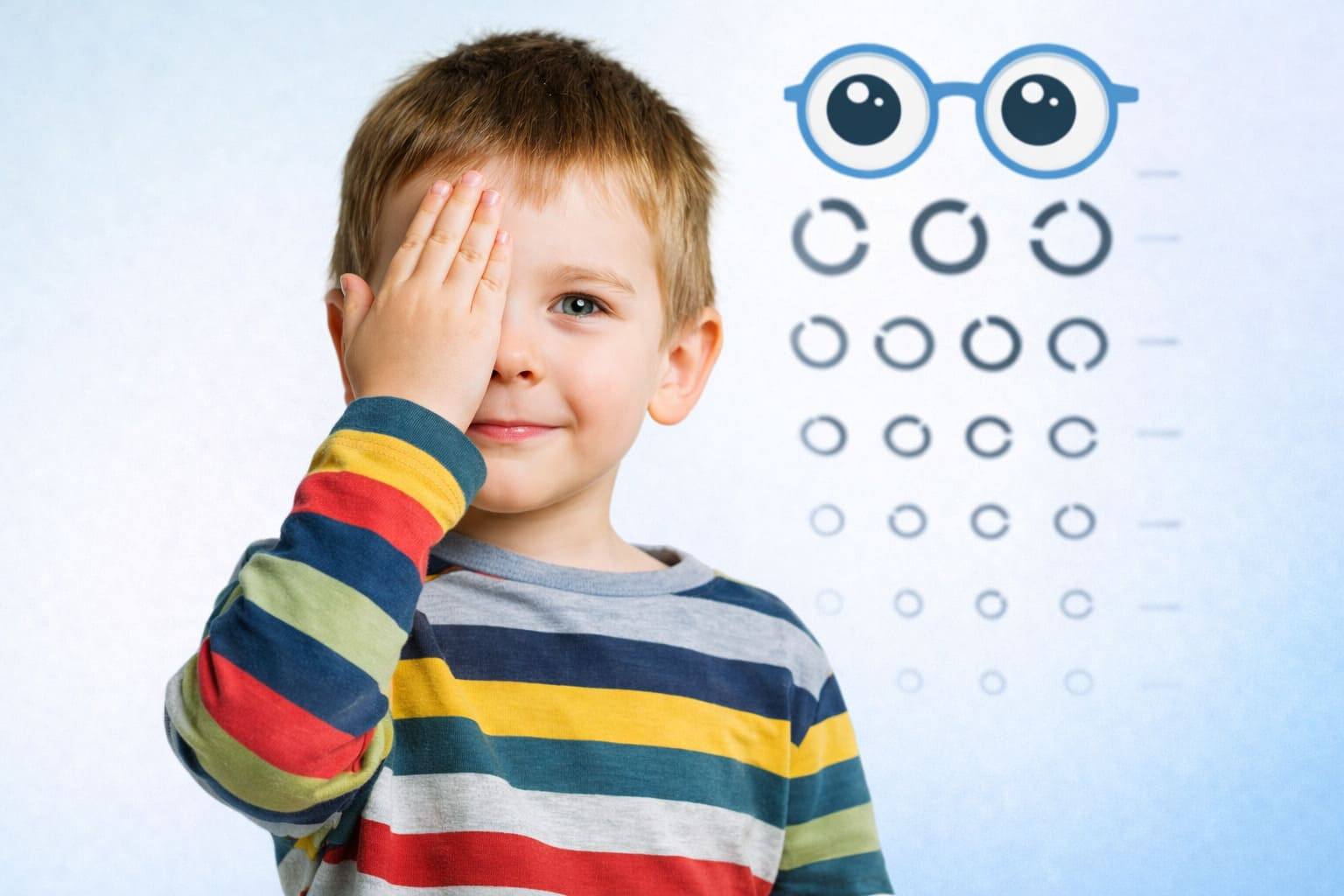
Preventive Eye Examinations for Children
Even if there are no symptoms, a child’s vision should be checked regularly. Children do not always notice that their vision has worsened, as they may perceive blurred vision as normal. This is why a preventive examination by a pediatric ophthalmologist helps detect vision problems promptly.
A preventive examination may detect:
- myopia;
- hyperopia;
- astigmatism;
- strabismus;
- amblyopia;
- accommodation disorders;
- inflammatory eye diseases;
- changes in the fundus.
Early diagnosis is especially important in cases of amblyopia, or “lazy eye,” because the effectiveness of treatment largely depends on the child’s age and how promptly the condition was detected.
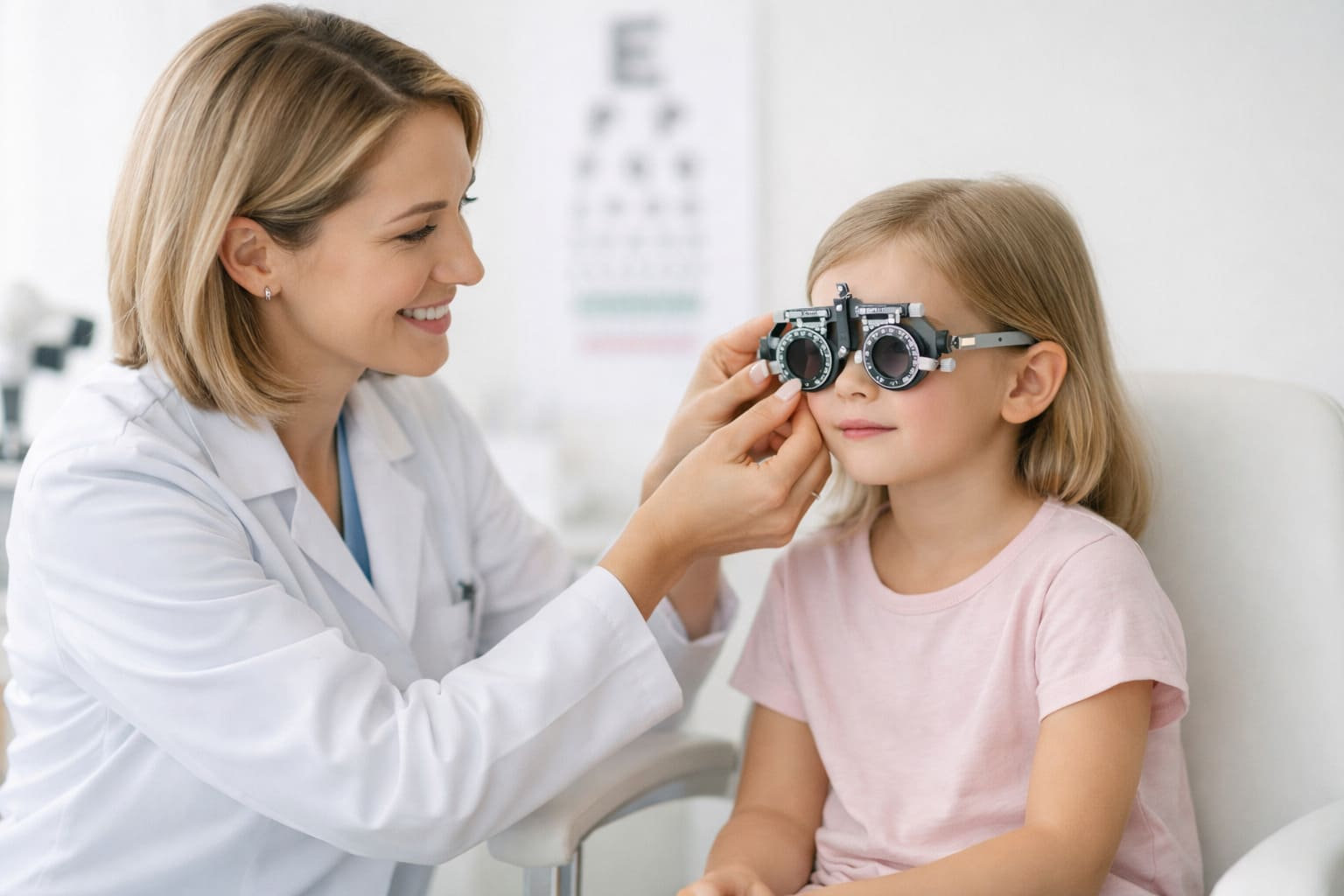
What to expect during a pediatric ophthalmologist appointment
The child is examined in a calm environment, taking into account their age and behavioral characteristics. The pediatric ophthalmologist explains each stage of the examination clearly and in an age-appropriate way so that the child feels comfortable during the vision assessment.
During the appointment, the doctor may perform:
- a visual acuity test;
- a refraction assessment;
- an examination of the anterior segment of the eye;
- an assessment of eye alignment;
- an eye movement assessment;
- a fundus examination;
- intraocular pressure measurement, if indicated;
- an eyeglass prescription;
- an assessment of binocular vision.
If the results of the basic examination are insufficient, the pediatric ophthalmologist may recommend additional diagnostic tests for a more detailed assessment of the visual system.
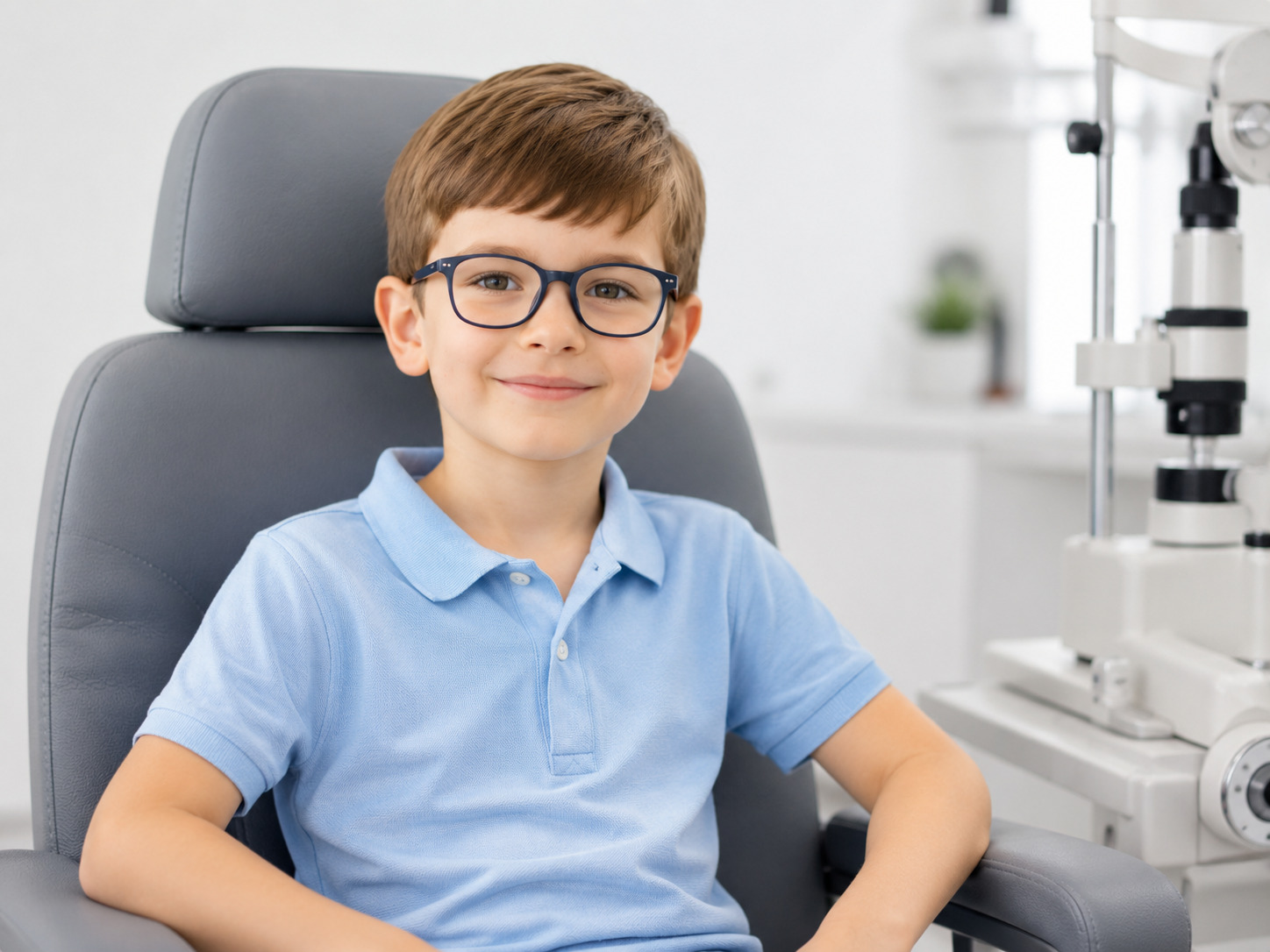
Additional Vision Diagnostic Methods
Pediatric ophthalmology at Lviv Medical Center includes not only a standard examination but also additional vision diagnostic methods. They help assess the condition of the eyes in greater detail, determine the cause of vision deterioration, and select an appropriate treatment strategy.
The following may be performed if indicated:
- autorefraction;
- retinoscopy;
- a dilated fundus examination;
- optical coherence tomography;
- keratometry;
- an accommodation assessment;
- strabismus assessment;
- a binocular vision test.
In some cases, to determine refraction more accurately, the examination is performed after eye drops that temporarily relax accommodation have been administered. This provides more accurate results and helps ensure the correct eyeglass prescription.

Visual acuity test
The doctor assesses how clearly the child can see at different distances using special charts or images appropriate for the child’s age. This method of testing visual acuity is called visometry.

Computerized vision diagnostics
Autorefractometry measures the eye's refractive power and refractive characteristics. The test helps detect myopia, hyperopia, or astigmatism.

Examination of eye structures
Using biomicroscopy, the ophthalmologist assesses the cornea, lens, and other structures of the eye in detail to identify any pathological changes.

Assessment of eye function
The doctor assesses how well the eyes work together, eye movement, eye muscle function, and accommodation. This helps identify disorders that may affect the quality of the child’s vision.
Take Care of Your Child's Eye Health Today
Timely vision screening helps detect problems at an early stage and prevent their progression. Schedule your child for a consultation with a pediatric ophthalmologist at Lviv Medical Center.
Additional Modern Diagnostic Methods
If the findings of a basic examination are insufficient, a pediatric ophthalmologist may recommend additional vision diagnostic methods. They help assess the condition of the eye structures more accurately, monitor the development of the child's visual system, and detect possible pathological changes in a timely manner.

Optical biometry
This examination accurately determines the axial length of the eye and other anatomical parameters. Optical biometry is particularly important for monitoring the progression of myopia in children, assessing risks, and selecting the next steps in treatment or vision correction.

Corneal Topography
Corneal topography provides a detailed assessment of the shape and curvature of the cornea. This method helps diagnose astigmatism, detect corneal changes at an early stage, and select contact lenses or orthokeratology (overnight) lenses.

Optical coherence tomography and fundus photography
These high-precision diagnostic methods allow for a detailed examination of the retina and optic nerve. They help detect pathological changes at an early stage, as well as monitor eye health and disease progression.

Perimetry
Perimetry is used to examine the visual field and determine its boundaries. The examination helps detect functional vision impairments that may not be identified during a routine ophthalmological examination.
Main Areas of Pediatric Vision Treatment
Device-based vision therapy
Treatment of nearsightedness (myopia control)
Treatment of farsightedness
Astigmatism treatment
Strabismus treatment
Amblyopia treatment
Our pediatric ophthalmologists
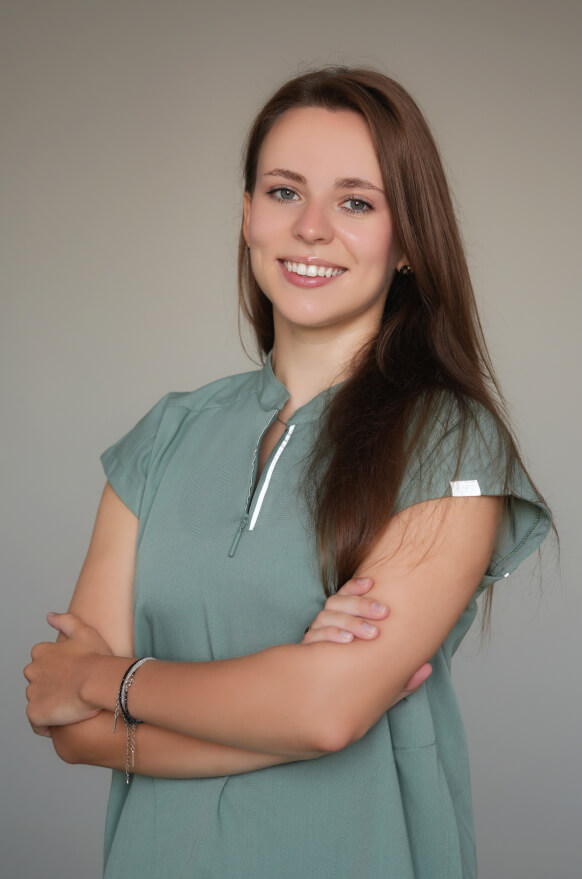
Amanda Boimistruk
Ophthalmologist
Practicing since 2023
Pediatric Ophthalmology, Ophthalmology
Vision therapy using specialized devices for children
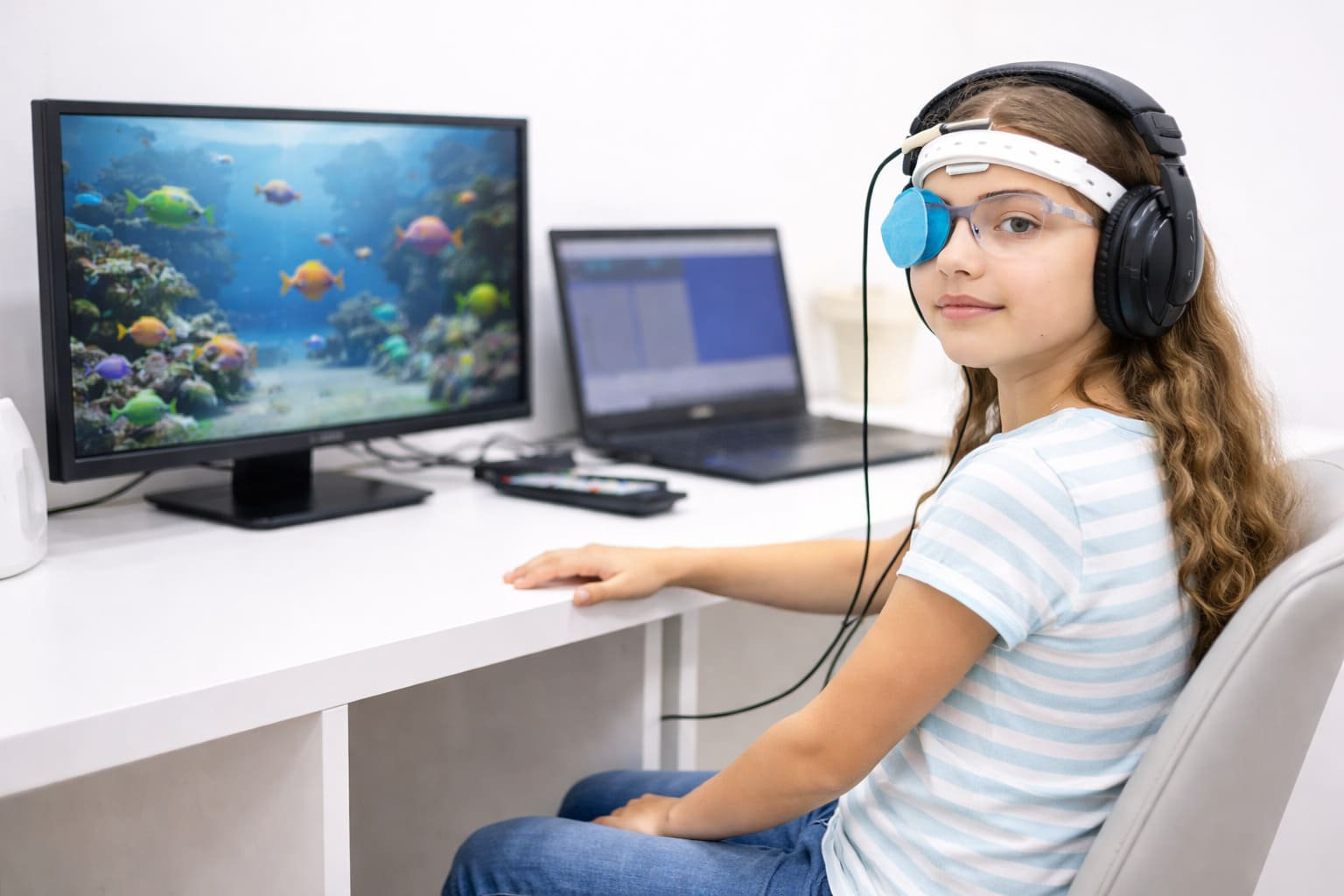
What is device-based treatment?
Device-based vision therapy for children may be included as part of comprehensive treatment for amblyopia, strabismus, accommodation disorders, and certain other functional disorders of the visual system.
This method is prescribed by a pediatric ophthalmologist after an examination and vision assessment. The device-based therapy program is selected individually, taking into account the child’s age, diagnosis, visual acuity, and ability to complete the proposed tasks.
Device-based therapy may be aimed at:
- stimulating the weaker eye;
- improving visual fixation;
- training accommodation;
- developing binocular vision;
- reducing visual strain.
Device-based vision therapy is not a universal method suitable for every child. It is used when indicated and when the ophthalmologist considers it an appropriate part of comprehensive treatment.
Who is device-based treatment recommended for?

Amblyopia
Device-based therapy may be used to stimulate the weaker eye, improve visual fixation, and increase visual acuity.

Myopia
The method may be included in the comprehensive treatment of myopia in children, particularly to train accommodation, reduce accommodative spasm, and control myopia progression.

Strabismus
Device-based vision therapy helps train the eyes to work together, improve binocular vision, and maintain the results of the primary treatment for strabismus.

Asthenopia
It is used to reduce visual fatigue, eye strain, and discomfort that may occur during studying, reading, or prolonged use of digital devices.
Vision therapy methods at Lviv Medical Center
Training at Panorama
KEM macular stimulator
ASO color-pulse stimulation
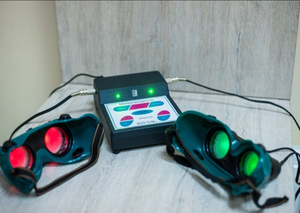
BRIZ accommodation therapy
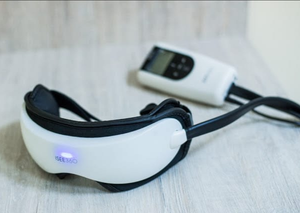
Accommodation training according to Dashevsky
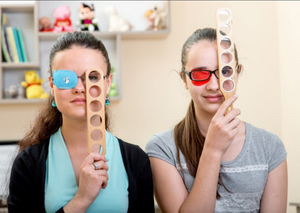
Accommodation Training According to Kovalenko
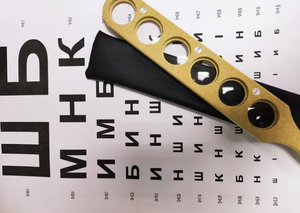
Amblyocor training
“Rainbow” accommodation training
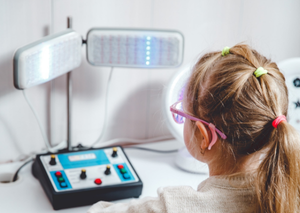
Synoptophore training

Do you suspect your child has vision problems?
A comprehensive examination will help determine the cause of the visual impairment and select an effective treatment program.
Treatment of myopia in children (myopia control)
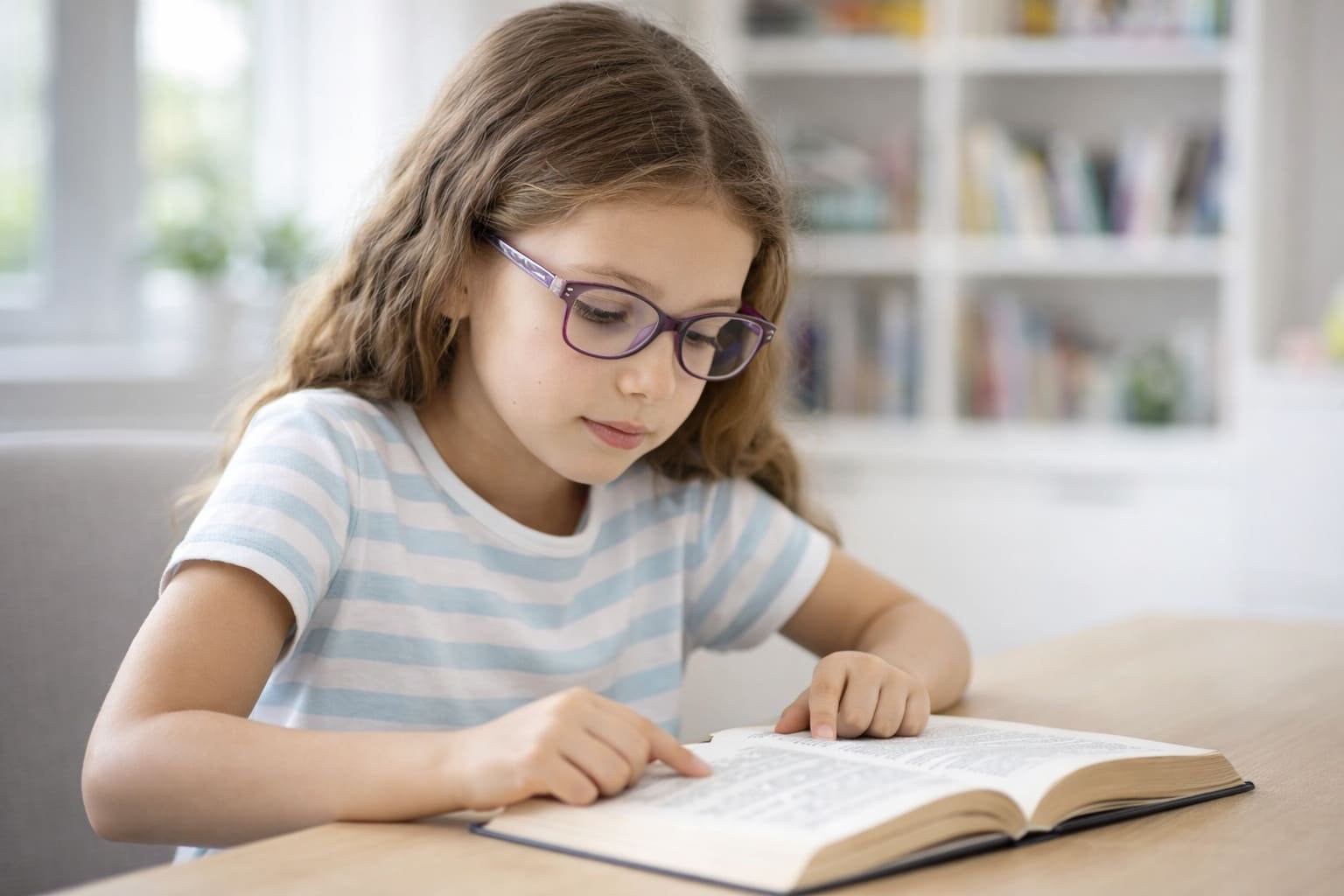
Myopia in children
Nearsightedness, or myopia, is a vision disorder in which a child can see nearby objects clearly, while distant objects appear blurred. Parents may notice that the child squints, moves closer to the television, sits closer to the board, or reports worsening distance vision.
Treatment of nearsightedness and myopia control may include:
- prescription glasses;
- soft contact lenses;
- overnight orthokeratology lenses;
- device-based therapy;
- recommendations for managing visual strain;
- regular examinations by a pediatric ophthalmologist.
The main goal of myopia control in children is not only to correct visual acuity but also to slow the progression of nearsightedness and regularly monitor changes in the visual system.
Methods for controlling myopia in children
Glasses
Contact lenses
Orthokeratology (night) lenses
Contact lenses for myopia control (Miopia)
Special spectacle lenses with defocus technology
Device-based treatment (vision therapy)
Overnight Contact Lenses for Children (Orthokeratology)
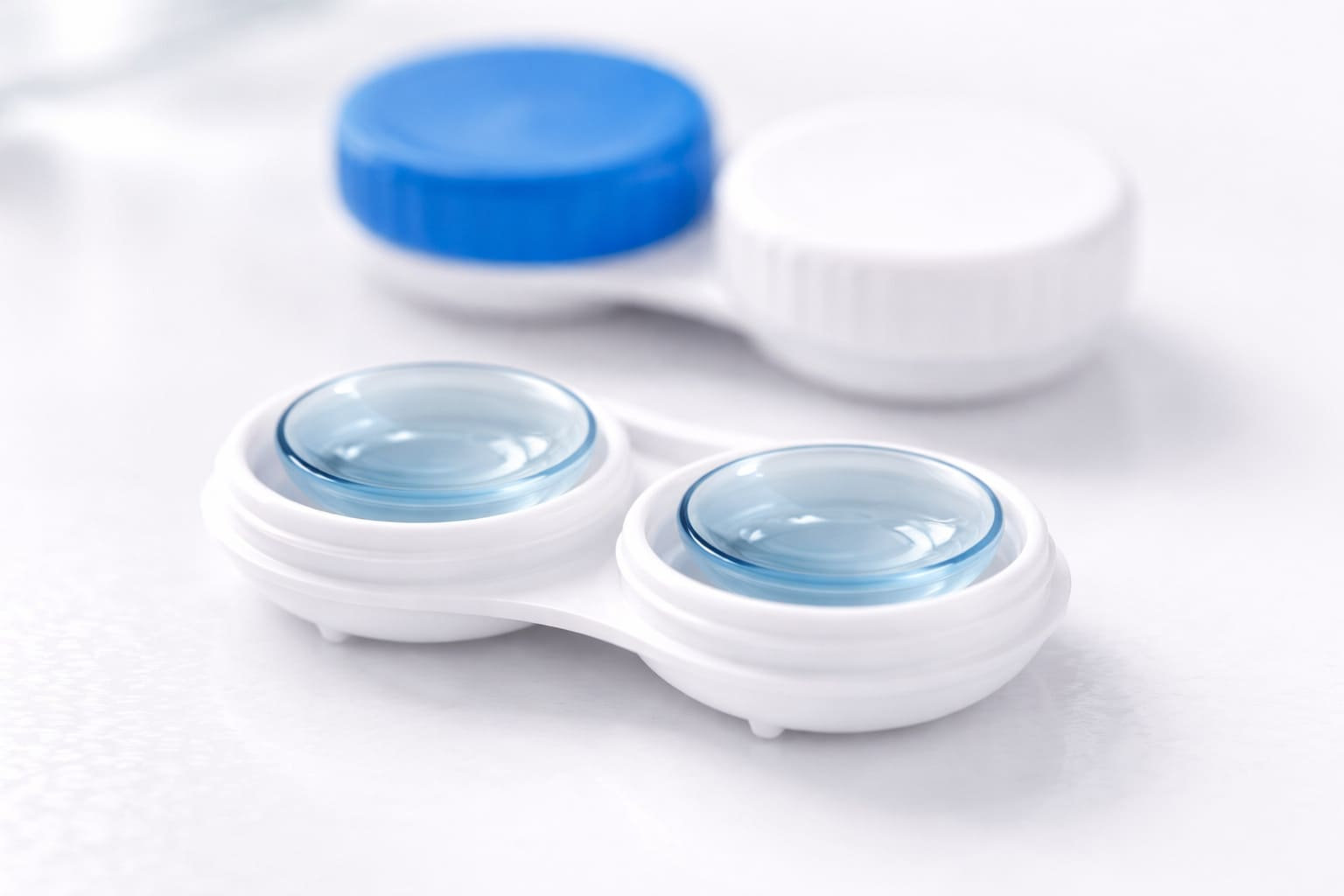
What Are Overnight Contact Lenses?
Night lenses are special rigid gas-permeable contact lenses that a child puts in before going to sleep and wears overnight. This method is called orthokeratology and is used to correct nearsightedness and control the progression of myopia in children.
During sleep, orthokeratology lenses temporarily reshape the cornea. After removing them in the morning, the child can see more clearly throughout the day without glasses or daytime contact lenses.

Who are overnight lenses suitable for?
Overnight lenses may be recommended for children with myopia, usually from the age of 6, provided the child is ready to follow the rules for contact lens use and daily hygiene.
Before fitting orthokeratology lenses, a pediatric ophthalmologist performs comprehensive vision diagnostics, assesses the condition and shape of the cornea, and determines whether this method of myopia correction and control is suitable for the individual case.
Benefits of overnight contact lenses

Freedom from glasses
After wearing orthokeratology lenses overnight, a child may see clearly during the day without constantly wearing glasses or daytime contact lenses.

Active Lifestyle
Overnight lenses are convenient for children who play sports, are physically active, and lead an active lifestyle, as they do not need to wear glasses during the day.

Myopia progression control
Orthokeratology lenses may be used as one method of myopia control and can help slow the progression of myopia in children.

Non-surgical correction
Orthokeratology allows vision to be corrected without surgery. The effect of overnight lenses is controlled and reversible, and the results are maintained through regular lens use.
Have you noticed that your child has difficulty seeing at a distance?
Do not postpone a vision check. A timely consultation with a pediatric ophthalmologist will help detect myopia at an early stage and select an effective method to control its progression.
Treatment of hyperopia in children

What Is Farsightedness?
Farsightedness, or hyperopia, can be a normal physiological feature in children of a certain age. However, if the condition is pronounced, persists for a long time, or is accompanied by symptoms, the child should see a pediatric ophthalmologist for a vision assessment.
Signs of farsightedness may include:
- rapid eye fatigue;
- headaches;
- reluctance to read;
- difficulty concentrating;
- occasional inward turning of the eyes toward the nose;
- blurred near vision.
Based on the diagnostic results, the pediatric ophthalmologist determines the degree of hyperopia and, if necessary, prescribes glasses and recommends an appropriate visual activity routine and regular follow-up examinations.
Which symptoms should you look out for?

Eye fatigue
A child's eyes may tire quickly while reading, writing, studying, or performing other prolonged visual tasks.

Frequent eye rubbing
If a child regularly rubs their eyes, this may be a sign of visual fatigue, eye strain, or discomfort.
Headache after visual strain
Headaches may occur after prolonged reading, doing homework, or using computers and other devices.
Strabismus
In some children with hyperopia, one eye may deviate from the shared point of fixation. In this case, it is important to have an examination with a pediatric ophthalmologist.
Methods of treating farsightedness
Vision correction with glasses or contact lenses
Device-based treatment
Treatment of complications
Eye Care and Visual Strain Management
Does your child complain of eye strain or headaches?
Do not postpone your consultation. A comprehensive examination will help identify the cause of visual discomfort and allow treatment to begin promptly.
Treatment of astigmatism in children
What Is Astigmatism?
Astigmatism occurs due to uneven refraction of light within the eye’s optical system. As a result, images may appear unclear, blurred, or distorted at both near and far distances.
A child with astigmatism may squint, tilt their head, tire quickly while reading, or complain of blurred vision. Treatment of astigmatism in children involves selecting appropriate vision correction, including glasses or contact lenses, as well as regular monitoring by a pediatric ophthalmologist to assess the child’s vision.
Can astigmatism be corrected?
Astigmatism is associated with the structure of the eye’s optical system, so it cannot be eliminated with medication or exercises. However, properly selected vision correction can compensate for astigmatism and provide the child with clear, comfortable vision.
Timely treatment of astigmatism in children is important for the proper development of the visual system and the prevention of complications. Even a low degree of astigmatism may require correction in childhood. If the eye receives a blurred image for an extended period, the risk of developing amblyopia, or “lazy eye,” increases, and this condition is much more difficult to correct at an older age.
Which symptoms should you look out for?
Eye fatigue
A child may tire quickly while reading, writing, or performing other visual tasks, sometimes after only 10-15 minutes.

Squinting or tilting the head
To make the image clearer, a child may frequently squint, tilt their head, or look at things from a particular angle.

Headache
With astigmatism, headaches may occur after studying, reading, or using digital devices, particularly in the forehead or brow area.

Confusing similar symbols
Due to blurred or distorted vision, a child may confuse similar letters and numbers, such as “н” and “п” or “8” and “0”.
Astigmatism Correction Methods
Glasses with cylindrical lenses
Toric contact lenses
Regular medical check-ups
Have you noticed that your child squints or gets tired quickly while studying?
An eye examination can help detect astigmatism promptly and select an effective correction method to support the proper development of the visual system.
Treatment of Strabismus in Children
What is strabismus?
Strabismus in children is not merely a visible difference; it is also a disorder that can affect the development of binocular vision and lead to amblyopia. It is therefore important not to wait for the child to “outgrow” strabismus, but to consult a pediatric ophthalmologist promptly.
The diagnosis of strabismus includes an assessment of eye alignment, eye movement, refraction, and binocular vision. Treatment for strabismus in children is selected individually and may include corrective glasses, occlusion therapy, vision therapy using specialized devices, special exercises, and, when indicated, surgical treatment.
Stages of strabismus treatment
Optical correction
Pleoptics (treatment of “lazy eye”)
Orthoptics and diploptics
Surgical treatment
Have you noticed signs of strabismus in your child?
A timely examination will help determine the cause of strabismus and begin step-by-step treatment to restore proper vision.
Treatment of amblyopia in children
How is amblyopia treated?
Treatment of amblyopia in children usually requires a comprehensive and consistent approach. The main goals of therapy are to eliminate the cause of the condition, stimulate the “lazy eye,” and gradually improve visual acuity.
Depending on the type and severity of amblyopia, a pediatric ophthalmologist may prescribe optical correction with glasses or contact lenses, occlusion therapy, special exercises, and vision therapy using specialized devices.
The earlier amblyopia is detected and treatment is started, the greater the potential for proper development of the visual system and improvement of the child’s visual function.
Causes of amblyopia
Strabismus
With strabismus, the brain may gradually suppress the image from one eye, causing its visual function to develop less effectively.

Anisometropia
A significant difference in refractive error between the eyes may interfere with the formation of a clear image and lead to amblyopia.

Congenital disorders
Congenital cataracts, ptosis, or corneal clouding may prevent light from reaching the retina normally and affect visual development.

Injuries or changes to the fundus
Eye injuries or pathological changes in the fundus can disrupt the normal development of visual function and contribute to amblyopia.
Frequently asked questions
At what age should a child have their vision checked?
The first eye examinations are performed in early childhood, and the doctor then determines the frequency of subsequent visits. It is especially important to have a child’s vision checked before starting kindergarten, before school, and whenever symptoms or noticeable changes in the child’s visual behavior occur.
How often should a child see an ophthalmologist?
Even if there are no vision problems, a child should visit a pediatric ophthalmologist for preventive examinations. In cases of myopia, amblyopia, strabismus, wearing glasses, or other ophthalmic conditions, the physician determines the frequency of follow-up examinations individually.
How does a pediatric ophthalmologist differ from an adult ophthalmologist?
A pediatric ophthalmologist considers the age-related development of the visual system, normal refractive values in children, and the risk of amblyopia, strabismus, and myopia progression. Vision testing methods are also selected according to the child's age and abilities.
Are a pediatric eye doctor and a pediatric ophthalmologist the same?
Yes. “Children’s eye doctor” is a commonly used informal term, while the official title of the specialist is pediatric ophthalmologist. Both terms refer to a doctor who diagnoses, prevents, and treats vision disorders in children.
How can you tell if your child has poor vision?
Attention should be paid if a child frequently squints, sits close to the television, bends very low over a book or notebook, tires quickly while reading, complains of headaches, or loses their place between lines. These signs are a reason to have the child’s vision checked.
Can Strabismus in a Child Be Treated?
The treatment approach for strabismus depends on its type and cause, the child’s age, and their visual function. Treatment may include correction with glasses, occlusion therapy, device-based therapy, special exercises, and, in some cases, surgery.
What is device-based vision therapy?
Vision therapy using specialized equipment is a set of procedures and exercises designed to stimulate and develop visual functions. A pediatric ophthalmologist may prescribe it for amblyopia, strabismus, accommodation disorders, and other conditions following diagnostic evaluation.
Do overnight lenses help with myopia?
Overnight orthokeratology lenses may be used to correct nearsightedness and control the progression of myopia in children. After a comprehensive eye examination and corneal assessment, an ophthalmologist will determine whether this method is suitable for a particular child.
Do I need a referral to see a paediatric ophthalmologist?
A referral is not usually required for a consultation with a pediatric ophthalmologist. Parents can schedule a preventive examination, vision test, or consultation for their child if symptoms arise.
How much does an appointment with a pediatric ophthalmologist cost in Lviv?
The cost of the appointment depends on the type of consultation and the range of diagnostic tests required for the child. You can view the current price in the “Prices” section or confirm it when scheduling an appointment.
Have you noticed that your child has poorer vision in one eye?
A comprehensive examination will help determine the cause of vision loss and begin treatment to restore vision.
- Eyelid surgery
- Vitreoretinal surgery
- Removal of a Subluxated Crystalline Lens
- Closed vitrectomy
- Optical Coherence Tomography (OCT)
- Vision diagnostics
- Examination before laser vision correction
- Pachymetry
- Tonometry
- Glaucoma Treatment
- Retinal coagulation
- Keratoconus Treatment
- Laser vision correction
- Cataract treatment
- Artificial Lens (IOL) Implantation
- Phakic lens implantation
- Pterygium Treatment
- Ophthalmology
- Pediatrics